Stop Buying Cheap Agarbatti
Close your eyes for a moment and think about the smell of your grandmother's home in the morning. That warm, woody fragrance that hit you the second you walked through the door. It wasn't the food. It wasn't the flowers. It was the agarbatti — lit before you were even awake, offered quietly to God, filling every corner of the house with something that felt like safety.
That smell is one of the most powerful memories an Indian carries. It doesn't matter whether you grew up in a bungalow in Ahmedabad or a small flat in Mumbai, if you were raised in a Hindu household, that fragrance is woven into you. It's not just a scent. It's ritual. It's devotion. It's home.
So here's a question that might feel a little uncomfortable: when did you last stop to think about what's actually burning in that stick?
Most of us haven't. We buy agarbatti the same way we buy salt — on autopilot, from the nearest counter, whichever brand is familiar or cheapest. And for decades, that was fine. But India has changed. Our homes have changed. And what we burn every morning deserves a second look.
What's Really Inside That ₹10 Packet?
When a manufacturer makes agarbatti at rock-bottom prices, they have a simple arithmetic problem. Every rupee has to be stretched across raw materials, labour, packaging, and distributor margins and still leave a profit. The only way to solve this is to substitute quality at every step. So the base of the stick becomes charcoal or coal powder instead of natural wood. The fragrance becomes a synthetic chemical designed in a lab to smell like sandalwood or rose, not actual sandalwood oil. The binder holding the stick together is a chemical adhesive, not the traditional halmaddi resin that has been used in Indian incense for centuries. None of this is a scandal. It's just economics. The problem is what happens when you light one of these sticks in a modern Indian apartment with the air conditioning running and the windows shut. Charcoal combustion releases fine particulate matter, carbon compounds, and VOCs — volatile organic compounds into your indoor air. Synthetic fragrance chemicals add more compounds when they combust. And unlike your grandmother's house with its open courtyard and cross-ventilation, your sealed 2BHK holds all of that inside. The people breathing it most? Your children. Your elderly parents doing their morning prayers. Anyone who spends long hours at home.
There Are Two Kinds of Agarbatti — And Nobody Tells You This The most valuable thing any incense buyer in India can know is that there are fundamentally two types of agarbatti.
The first is charcoal-based: coal powder forms the combustion base, synthetic fragrance is applied on top, and it burns fast and hot.
The second is white agarbatti where the stick is made from natural wood powders, dried herbs, aromatic resins, and real essential oils. The fragrance isn't a coating. The difference in experience is immediate. Charcoal agarbatti smells loudest when you first light it, then fades quickly into something flat or slightly harsh. White agarbatti opens slowly, deepens as it burns, and fades softly — the way a good perfume does. The fragrance stays in the room long after the stick goes out, warm and clean rather than chemical.
And there's one simple test that never lies. Light a stick and let it finish. White or grey ash means natural white agarbatti — clean combustion, genuine ingredients. Dark or black ash means charcoal base. That's what you've been burning in your home.
Most people who try this test for the first time are genuinely surprised. They've been burning dark-ash agarbatti for years without knowing there was any other kind.
The Upgrade Costs Less Than You Think Here's where most people expect a lecture. It's not coming. The price difference between a budget agarbatti and a properly made premium white agarbatti works out to roughly ₹300 to ₹500 more per year for a household that burns daily. That's less than a tank of petrol. Less than one dinner out. For 365 days of cleaner, richer fragrance in your home — for air that doesn't carry charcoal combustion products, for a morning ritual that smells the way it's supposed to — it's not a complicated decision. And if you've never burned genuinely premium agarbatti before, the first time can be a small revelation. The fragrance doesn't hit you all at once. It arrives slowly — the warm base first, then the mid-notes of the specific flower or herb, then something softer underneath that's hard to name but unmistakably right. It fills the room without overwhelming it. When the stick goes out, the scent stays. That is what real sandalwood smells like. That is what real jasmine smells like. Not a lab recreation — the actual thing.
Your Morning Ritual Deserves This
The agarbatti you light every morning is not a trivial purchase. It's the first fragrance that enters your home each day. It's the offering you place before your God. It's the air your family breathes while the house wakes up. And quietly, without you realising it, it's the smell your children are absorbing into memory — the scent they will carry for the rest of their lives as the smell of home. Choosing better isn't about spending more for the sake of it. It's about realising that what you burn in your home matters — to your health, to the quality of your ritual, and to the fragrance memory you're creating for the people you love.
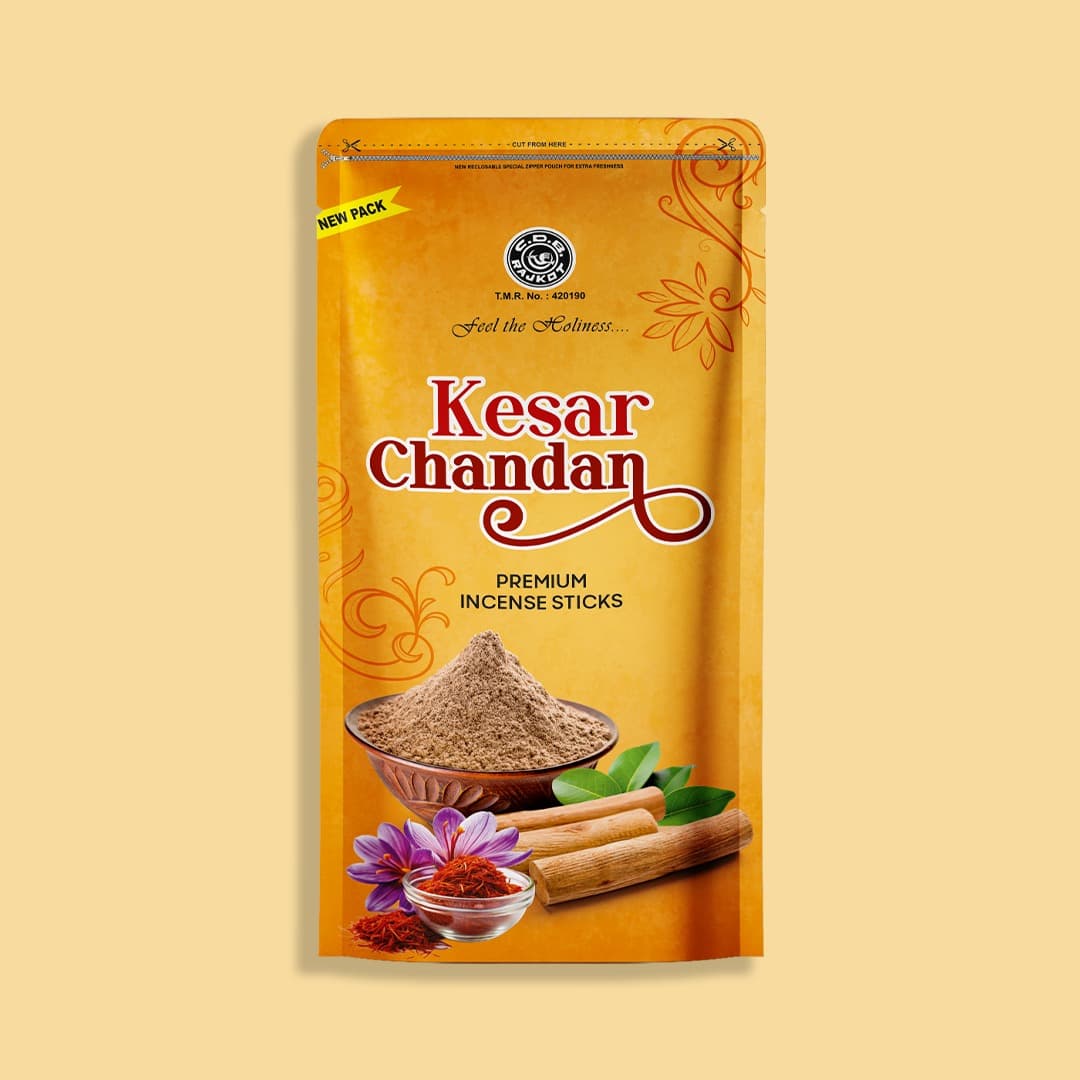
This is exactly why CD Brothers exists. We make premium white agarbatti — charcoal-free, made from natural ingredients, in fragrances that are genuine: sandalwood, jasmine, rose, loban, guggal. Every stick is packed in a resealable zipper pouch so the last one is as fragrant as the first. No synthetic shortcuts. No charcoal base. Just honest, beautifully made agarbatti for homes that deserve better. Explore the CD Brothers collection and find your fragrance. Your morning ritual will never smell the same again in the best possible way.